
- What industrial and logistics real estate is
- Demand drivers
- Why 1031 and DST investors choose it
- Lease and income structure
- Typical DST hold and business plan
- Illustrative return and distribution ranges
- Key risks
- Market and operator considerations
- Tax and depreciation angle
- How to access industrial through a DST
- Who it suits
What industrial and logistics real estate is
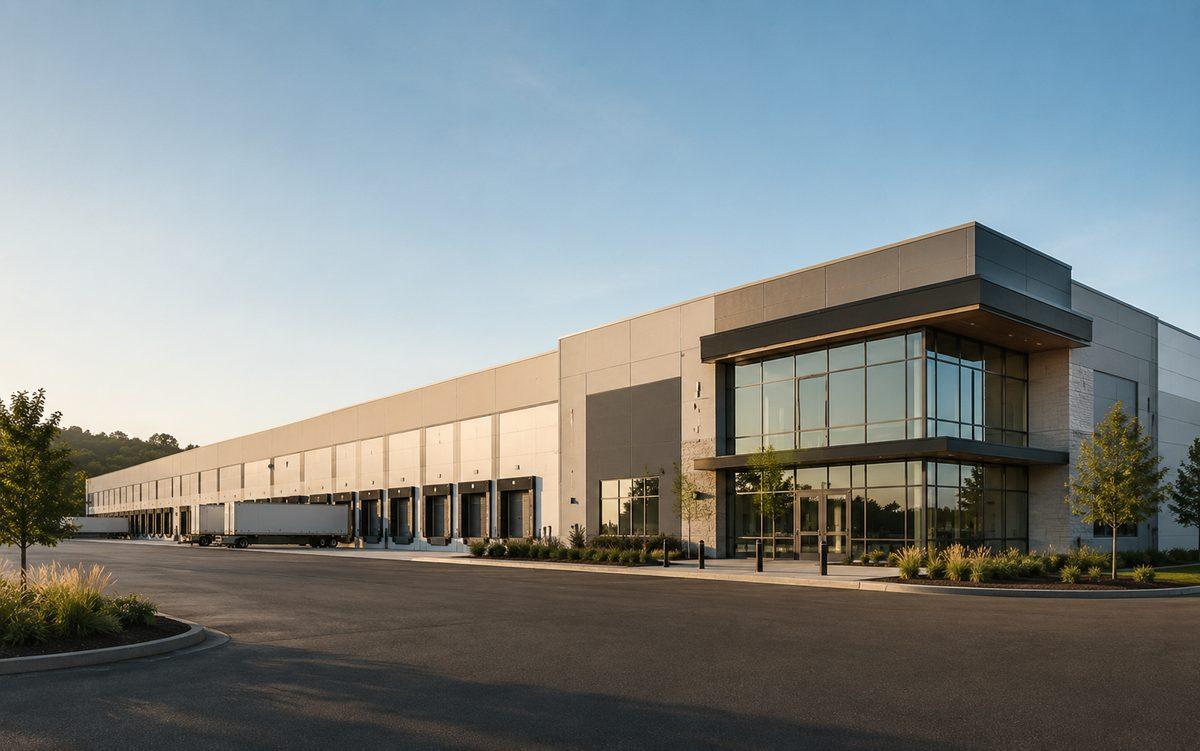
This asset class covers warehouses, distribution centers, light manufacturing, cold storage, and last-mile delivery facilities — the physical backbone of how goods move and are stored. Buildings are often large, single-tenant boxes leased to logistics operators, retailers, or manufacturers, though multi-tenant business parks exist too. In the DST structure, a sponsor acquires stabilized industrial assets, frequently with established tenants on long leases, and investors hold beneficial interests in the trust. This gives a 1031 exchange access to institutional logistics real estate that would be hard to buy individually.
The sector includes several distinct sub-types, each with its own characteristics:
- ›Bulk distribution / big-box warehouses for regional and national distribution, valued for high ceilings and truck access.
- ›Last-mile / infill logistics near population centers, supporting fast delivery.
- ›Light manufacturing and flex space, blending warehouse and office use.
- ›Cold storage, specialized refrigerated facilities serving food and pharmaceutical supply chains.
Physical attributes matter a great deal. Clear height (ceiling height), the number and configuration of dock doors, truck court depth, column spacing, and proximity to highways, ports, and population determine how functional — and how leasable — a building is over time.
Demand drivers
Industrial demand has been supported by structural shifts in how goods are bought and moved:
- ›E-commerce growth, which requires substantially more warehouse space per dollar of sales than traditional retail.
- ›Supply-chain resilience and reshoring, prompting companies to hold more inventory closer to customers.
- ›Same-day and next-day delivery expectations, driving demand for infill, last-mile space.
- ›Population and consumption growth in particular regions.
These are powerful trends, but they do not guarantee performance at any individual building. Local supply, the specific location, and tenant decisions ultimately drive results, and demand trends and past performance do not guarantee future results.
Why 1031 and DST investors choose it
Industrial leases are often long-term and net, meaning tenants typically cover many operating costs — an attractive profile for passive owners. Single-tenant buildings leased to established companies can offer predictable income, while the sector's link to e-commerce and supply-chain trends has supported strong demand in recent years. For 1031 exchangers, a DST converts this into a hands-off holding while preserving tax deferral.
Lease and income structure
Many industrial assets use net leases running roughly 5 to 15 years, sometimes with built-in rent escalations (for example, fixed annual bumps) that provide visibility into future income. Net structures push some or all property operating expenses — taxes, insurance, and maintenance in a triple-net lease — to the tenant, which can simplify operations and stabilize net income. Key income features include:
- ›Long primary lease terms with defined expiration and renewal options.
- ›Contractual rent escalations that grow income over the hold.
- ›Tenant credit ranging from investment-grade corporations to private operators.
Industrial DSTs commonly illustrate target distributions in roughly the 4%–6% annual range, paid from net operating income and not guaranteed. Because income may rely on one or a few tenants, lease length, tenant credit, and renewal prospects are central to the risk-and-return picture.
Typical DST hold and business plan
Industrial DSTs typically target a hold of roughly five to ten years. The business plan is often relatively straightforward for stabilized, net-leased assets: collect contractual rent, benefit from built-in escalations, and sell at the end of the hold. Some sponsors pursue value-add strategies — leasing up vacant space, renewing or replacing tenants at higher market rents, or repositioning a building. Because so much income can depend on a single tenant, the sponsor's underwriting of tenant credit and of the building's re-leasability is critical.
Illustrative return and distribution ranges
All figures are illustrative, not guaranteed. An industrial DST might illustrate:
- ›Current distributions of roughly 4%–6% annually, paid monthly from net operating income.
- ›Contractual rent escalations that lift income modestly each year.
- ›A potential gain on sale if cap rates and demand are favorable at exit.
Actual results can be lower, distributions can be reduced or suspended, and the exit value is unknown. Past performance does not guarantee future results.
Key risks
- ›Single-tenant concentration — if a major tenant defaults or fails to renew, income can drop sharply.
- ›Re-leasing risk — a large, specialized box can take time to backfill, with downtime and tenant-improvement costs.
- ›Functional obsolescence — outdated clear heights, insufficient dock doors, or poor locations can erode value.
- ›Economic and trade sensitivity — industrial demand is tied to consumption and global trade flows.
- ›Leverage magnifies gains and losses.
- ›Illiquidity and loss of control — no secondary market, and decisions rest with the sponsor.
Distributions can be reduced or suspended, and principal is at risk.
Market and operator considerations
Location and building functionality are the heart of industrial value. Evaluate proximity to highways, ports, rail, and population; the depth and quality of the local tenant base; and the building's physical specifications relative to modern logistics requirements. On the income side, scrutinize the tenant's credit and business, the remaining lease term, escalation structure, and renewal options. A long lease to a weak tenant is not the same as a long lease to a strong one. Assess the sponsor's track record and leasing relationships.
Tax and depreciation angle
Industrial real estate held through a DST passes depreciation through to investors, which can shelter part of the distributions you receive so that a portion is tax-deferred rather than fully taxable. Cost segregation can sometimes accelerate depreciation on certain components. At the end of the hold, a 1031 exchange into another property or DST can continue deferral, and a 721 UPREIT may be available. The right approach depends on your situation — consult your CPA and attorney.
How to access industrial through a DST
Industrial DSTs are private securities offerings for accredited investors, accessed through a sponsor or broker-dealer. As 1031 replacement property, you identify the DST within 45 days and close within 180 days, with a qualified intermediary holding sale proceeds. The sponsor manages the asset and tenant relationships and may eventually sell or offer a 721 UPREIT option. Lease terms, tenant credit, and leverage vary by offering, so read the documents closely and consult your CPA and attorney before investing.
Who it suits
An industrial DST may suit 1031 investors who want long, net-leased income with relatively low operating involvement and exposure to logistics demand, and who can accept single-tenant concentration and illiquidity. It is less suited to those needing liquidity, wanting guaranteed income, or who are not accredited. This material is educational and not investment, tax, or legal advice.
See your matched options
Get illustrative DST, net-lease, and fund options for your exact situation — free, with no obligation.
Key takeaways
- ✓Industrial and logistics assets often carry long, net leases that push operating costs to tenants — appealing for passive owners.
- ✓Demand has been supported by e-commerce and supply-chain trends, but those trends do not guarantee future results.
- ✓Single-tenant concentration and functional obsolescence are key risks; tenant credit and lease length drive outcomes.
- ✓Industrial DSTs are illiquid accredited-investor securities; illustrative distributions often fall in the 4%–6% range.
Frequently asked questions
Why is industrial real estate popular with 1031 investors?+
Long, net leases to established tenants can provide relatively predictable, low-touch income, and the sector has benefited from e-commerce and logistics demand. Outcomes still depend on tenant credit and lease terms.
What does a net lease mean here?+
Under a net lease, the tenant pays some or all of the property's operating expenses — taxes, insurance, and maintenance in a triple-net structure — in addition to rent, which can simplify ownership for the landlord.
What is the biggest risk?+
Single-tenant concentration. If a key tenant leaves or defaults, income can fall sharply, and re-leasing a specialized facility may take time. Location and building functionality also matter.
How long are typical industrial leases?+
They commonly run about 5 to 15 years, often with scheduled rent escalations. Lease length and renewal prospects are central to the income picture in a DST.
Related reading
This article is educational and not tax, legal, or investment advice. 1031 exchanges are complex — consult your own CPA and attorney. DST and fund offerings are securities available to accredited investors only; all examples are illustrative.